The Murder of John Pork, Rise of Tim Cheese, and the Brainrot Mascot Era
How the “John Pork” Meme Was Brought to New Narrative Heights in 2025
By: Junaid Malik
It was a dark night in Meme City. The rain slicked the concrete like an old VHS tape on rewind. Sirens wailed somewhere far off, but here in this alley, the only sound was the hum of neon and the drip of something thick onto pavement. A phone lay buzzing in the gutter. It belonged to John Pork. But John Pork wouldn’t be calling anyone ever again. His body, oddly humanoid, smooth, unmistakably pig-like, was sprawled in a pool of his own grease. The killer? Tim Cheese.
To understand the “Murder of John Pork” meme that’s taken the internet by storm, we have to start at the beginning, deep in the underbelly of online culture. Welcome to the world of brainrot mascots: surreal, absurd characters created by the collective chaos of internet users.
These mascots, often born from inside jokes, crude doodles, or bizarre AI prompts, are the new gods of our ironic pantheon. They’re often poorly made. They don’t sell products. They just exist. Weird, confusing, and with their own impressively made story arcs through the collaboration of internet users.
Creatures like Skibidi Toilet and Freakbob emerge from the brainrot void: a term for content so stupid, so cursed, it wraps back around into brilliance. Enter John Pork and Tim Cheese.
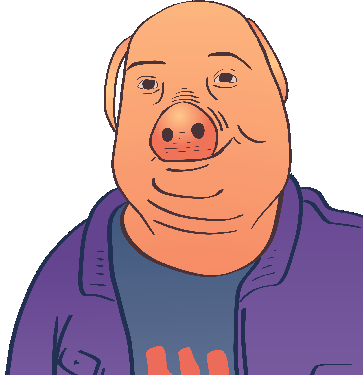
So, who is John Pork? He is a virtual influencer characterized by his anthropomorphic appearance: a human body with a pig’s head. He first appeared on Instagram in 2018 under the handle @john.pork, sharing selfies and videos that showcased his unique persona. Over time, his content spread to TikTok, where his uncanny look inspired a variety of memes.
In March 2023, John Pork became the subject of a viral meme known as “John Pork is calling.” This meme features images and videos simulating an incoming call from John Pork, often accompanied by humorous or surreal captions. The trend gained significant traction on platforms like TikTok, leading to a surge in his popularity.
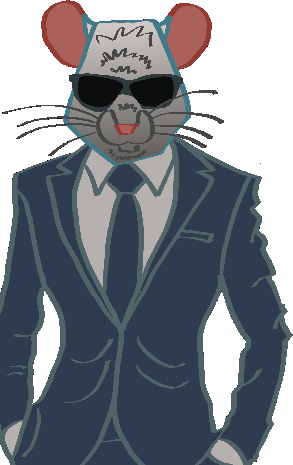
And Tim Cheese? He’s a rat in a suit. Designer shades. Italian leather gloves. A hitman. His lore, painstakingly assembled across TikToks, Discord threads, and cursed YouTube edits, reads like a fever dream. At the time of writing, the lore is as follows:
Tim Cheese assassinated John Pork, Freakbob and two other meme mascots. He was found living alone in a cabin in the Colorado woods, evading police. After his arrest, he staged a violent prison break and vanished. His motives? Unknown. His vibe? Slick; dangerous. Yet somehow, perfect for the next big meme trend. Fans of Tim describe him as the “rat Tyler Durden.” He’s noir incarnate, dealing in death, deception, and unsettlingly charismatic rodent energy.
The murder of John Pork wasn’t just a meme; it was a movement. A noir-style explosion of creativity. The internet turned these brainrot characters into archetypes: detectives, killers, tragic heroes, rogues. TikTok edits set to moody indie music began appearing: “The year is 2023. John Pork is dead. Tim Cheese walks free. The law won’t stop him. Only we can.”
What turbocharged the popularity of these mascots wasn’t just the lore, it was the visuals. Early depictions of mascot-based memes would usually be simple, sketched in MS Paint or badly Photoshopped. But everything changed with AI image generation.
With tools like Midjourney, DALL·E, and Stable Diffusion, meme makers could now generate cinematic shots of Tim Cheese sitting on a bloodstained couch in a Colorado cabin, render John Pork in “Blade Runner”-style neon rain. They could create crime scene photos, mugshots and even fake surveillance footage.
AI lowered the barrier to visual storytelling. What used to take an artist hours could be done in seconds. Fans didn’t just consume the lore, they built it. Meme storytelling evolved into communal myth-making, with AI serving as both brush and canvas. Tim Cheese’s surge in popularity and the many images of him circulating on the internet are thanks to the power of AI generation, allowing people to create their own meme mascots in mere seconds.
Now let’s talk about meme families. Clusters of memes that share common aesthetics, themes, tone, or cultural origins. Think Marvel Cinematic Universe, but instead of superheroes, there are ironic frogs, image macros, surreal edits, and TikTok sound bites. These aren’t just isolated jokes. They’re parts of larger, evolving ecosystems of content that echo each other, reference each other, and build on one another over time.
Some meme families are built around recurring characters or archetypes (like brainrot mascots), while others form through shared formats (e.g., “Drakeposting,” “NPC Wojak”). Others still are united by aesthetic and vibe, like vaporwave memes, deep-fried images, or cursed screenshots. These families often cross platforms: a meme born on 4chan may mutate on Twitter, gain irony layers on TikTok, and be reborn on Instagram with a new caption and context.
John Pork, a meme that gained viral popularity back in 2023, was suddenly intricately linked to Freakbob and the newest character who debuted in 2025, Tim Cheese, despite there being no relevance or connection between the three memes otherwise. They all fell into the same meme family, becoming interlinked and connected at the whim of the internet.
It’s not just random content anymore, it’s networked mythology. Meme families operate like shared universes, where lore, tone, and imagery interlink, often evolving faster than traditional media can keep up. Users within these networks become both audience and creator, remixing and reinterpreting content endlessly. That’s why memes don’t just go viral, they metastasize.
“It’s tempting to write all this off as ‘just memes.’ But that misses the point. Brainrot mascots like Tim Cheese and John Pork aren’t just jokes. They’re mirrors. They reflect our chaotic, hyper-connected digital lives.”
These networks grow stronger with every new spin-off or mutation. A single meme format might spawn dozens of variations, each reflecting different aspects of the human experience: alienation (e.g., Wojak), absurdity (e.g., Skibidi Toilet), nostalgia (e.g., SpongeBob memes), or simply the universal need to laugh through the chaos. In this sense, memes function not just as entertainment, but as art of the digital age, collectively authored, endlessly iterative, and deeply revealing of the cultural moment.
It’s tempting to write all this off as “just memes.” But that misses the point. Brainrot mascots like Tim Cheese and John Pork aren’t just jokes. They’re mirrors. They reflect our chaotic, hyper-connected digital lives. They represent how art, irony, and AI now swirl into new forms of folk storytelling.
The internet gave us characters. AI gave them faces. And we gave them meaning. So next time you hear a ringtone in the dark…
Will you answer?