The Incel Pipeline: The Origins of Incels
How Incels Came to Be
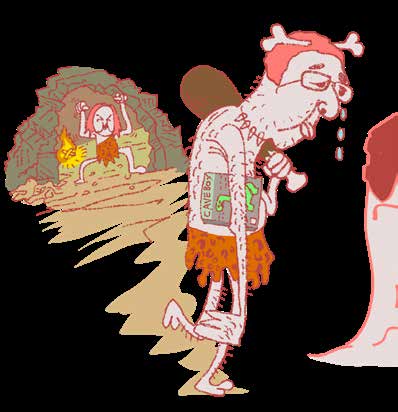
Since the dawn of mankind, incels have been around. Like trolls in medieval folklore, they’ve been lurking in the forgotten corners of human history, waiting until 4chan would finally be invented. As Homo sapiens first fashioned tools, each of them wanted theirs to be better than the rest. Perhaps one of them spent days fashioning the perfect spear, hoping the local cavewomen would notice how impressive his tool was. But it didn’t matter, because they all knew CaveChad’s spear was longer.
Some of the cavemen were able to move past this. They lived normal lives and had intimate relations with lots of their blood relatives. CaveChud wasn’t as fortunate with his own female cousins, so he grew resentful towards all the CaveChads out there. At some point, CaveChud would stop interacting with them, and he’d stop bothering to harass all the local cavewomen, too. Instead, he’d sit in the darkest corner of the cave, scraping ticks off his own head and eating them. He’d toss rocks on the floor, escaping reality with the game. Eventually, he’d spend all his caveman money on Rocks, throwing them around night and day, until CaveMom kicks him out of the cave, because all he ever does is play Rocks, and she doesn’t want to see her bloodline die off like the Neandertals.
After that, he’s mad at women, too, and even if they wanted to see his spear, he wouldn’t let them. But even though he might want to isolate himself from everyone, humans are social creatures. And just as lonely modern humans will seek out other lonely modern humans, he’ll go looking for another CaveChud. He could draw a face on a tree stump if he wanted, but it’s more likely he’d seek out a friend, another man to play Rocks with him in the corner of the cave. This CaveChud would scoop up some more pebbles, and they could have Rocks: Expanded DLC. Maybe if they find enough CaveChuds, they’ll have enough friendship and support in their lives to ensure they’re never lonely again. That is, until one of them develops a crippling addiction to NSFW caveman content, another one becomes involved in local caveman politics, and the last one launches an elaborate human trafficking scheme in Romania.
At least things were simpler in the caveman times. The internet is still a new invention. If there’s anything the history of human development has taught humanity, it’s that sitting in front of a screen all day is probably not good for us. With the online world forever altering the way people interact with one another, things were always going to get weird.
When the world is so interconnected, it’s easier than ever to feel isolated. Though it may sound like a paradox, anyone who’s had a social media account knows it’s true. Online, people can see everyone they know post about their new relationships, financial successes, and seemingly perfect lives. It’s easier than ever to see who our high school crushes are dating now, or to stalk the Instagram profiles of our exes. Influencer-heavy platforms like TikTok and Instagram are full of couples’ challenges and clips of elaborate Valentine’s Day gestures. On more anonymous platforms like Reddit, it’s impossible to avoid the millions of people sharing relationship stories or posting photos of their dramatic proposals. Those who are feeling particularly self-loathing can head on over to /r/RoastMe and have random strangers obliterate any self-esteem they might have had left.
Those who jump to judge incels often forget that social media makes it difficult for men and boys to interact genuinely. Even on platforms that appear to encourage respectful discussion (though there’s no such thing as a truly respectful discussion online), it isn’t easy for men to engage with one another on a meaningful level, at least without someone downvoting them for using an emoji or posting their IP address because they didn’t like a joke. If a man is feeling lonely, he can’t talk about it without being called gay, so he can rant about things on 4chan instead, where someone in the comments will tell him to stick a fork in an electrical socket. Or he can turn to the incel community, where feeling lonely isn’t such a big deal, because they can help him be angry instead.
Social media also sets forth some very specific expectations for men and boys. They each should fit into one of the approved roles, like being an Alpha male, Beta male, or Sigma male. He’s either a Chad or a Virgin, there’s no in-between. If you want to really get into specifics, it’s possible he’s a Soyboy or a cuck, too. This is a rigid caste system, and there’s no escaping it. No matter how hard he looksmaxxes, a Soyboy may never become a Chad. Incelldom is alluring to many because it questions the top of the hierarchy, arguing that a Chad isn’t really a Chad after all, he’s just another cuck.
“In these so-called communities, men are greeted with casual misogyny, alt-right ideologies, and false prophets in skin-tight shirts.”
When they get together and come up with these beliefs, those who once belonged to the “untouchable” castes are able to feel a little better about themselves, and when those on the bottom of the hierarchy come together, these stressed-out and isolated men can find a place to belong and a pathway to overthrow the Chads. In these so-called communities, men are greeted with casual misogyny, alt-right ideologies, and false prophets in skin-tight shirts. Things may be getting weird now, but the incel story goes far back than many people think, and it only gets weirder. It starts, surprisingly, with a bisexual Canadian woman.
In 1996, an Ottawa woman known only as “Alana” had just entered her first romantic relationship. In her mid-twenties, she had just graduated from psychotherapy, which she underwent in order to better manage her anxiety. On her now-defunct website, she wrote of the experience, saying, “I realized: If I could start dating after adolescence, other people could too. We needed research and support.” So, she sought out a way to share some support with others.
By 1997, the internet was still a new thing. The World Wide Web became available for personal use in 1993, and for the most part, people were just using it to send the Dancing Baby gif back and forth in work email chains. But in those next few years, the internet would evolve from its primordial soup into a place where people could connect with one another. An early internet user was not yet corrupted by the evils of anonymity and thought they could discover a genuine community through the blocky screen of a Macintosh. So, Alana created her website, entitled “Alana’s Involuntary Celibacy Project.”
Alana hoped the site would be comforting to others who were feeling romantically isolated. Coded in HTML, the site listed articles written by Alana herself, as well as personal stories people submitted to her after she advertised the site in local news groups. According to the website, “involuntary celibacy” is defined as “wanting to have sex and/or a relationship, but being unable to find a willing partner.” Eventually, a site user suggested Alana shorten the term “involuntary celibate” to “incel,” and the term was born.
Regarding the early site, Alana says, “Support groups were a new thing on the internet at that time, so this was the first opportunity for people to connect internationally about these dating difficulties.” As the site evolved into a forum and users spoke to one another, Alana described the typical site users as “depressed and frustrated, but not at all violent.” She said she didn’t even need to moderate the forum’s posts and comments, as everyone was respectful and supportive. Obviously, this didn’t last.
As time went on, users of the website posted more bitter sentiments. On her second site, Lovenotanger.com, Alana wrote, “After a few years, I stopped working on the website or participating in the mailing list. It wasn’t a helpful place to discuss my own issues. I couldn’t really face reading the forum messages often – perhaps because people shared so much sadness and despair.” Some of these users seemed angry towards women, at society, or both. Instead of supporting one another, some users seemed alienated and angry, and fostered a shared sense of resentment throughout parts of the site.
After years of reading through comments, Alana saw that the site was becoming increasingly dominated by heterosexual men. Many of their stories sounded eerily similar, and as they spoke to one another, their resentment towards their incel status permeated every interaction. Some wanted to find a way out of the incel lifestyle, while others only wanted to complain and point fingers at anyone but themselves. At this point, Alana could sense that the site wasn’t a positive place anymore, and she decided she couldn’t keep engaging with it. In hindsight, she realized the problem was much deeper.
On Lovenotanger.com, Alana described the issue as, “Maybe it was because some of the men were clueless about women, lumping us all together as intimidating creatures, looking for simple formulas to ‘get a girl.’ At that time, I didn’t recognize the emotional toll it takes to read sexism and negativity.” She added that she felt guilty about failing to accomplish the project’s original wholesome ambitions, saying, “It was time to admit that I’d drifted away. I hate thinking about the website, the incel project, the lonely life, the years of therapy it took me to overcome enough anxiety to date anyone. I had always felt ashamed of my dating difficulties, and did not want to keep reliving my youth through other people’s struggles.”
Soon, these quotes from Lovenotanger.com would be the last the world would hear from Alana. The incel origin story took a dark and tragic turn in the early 2010s, one that forever changed the way incels were viewed by the rest of the world. There’s a lot more to know about the internet’s most socially broken outcasts–stay tuned for the rest.