A Guide To Gen Z Lingo

A Digital Dictionary for Buzzwords Like “Rizz” and “Huzz” and Their Implications for Internet Slang
Whether you’ve been around since the early 2010s or you just recently entered the wondrous world of internet culture, you’ve probably been exposed to a wide variety of internet buzzwords or phrases that make little to no sense. In our current multi-faceted internet era, it seems that a new word is introduced every day, and we usually have to scramble to try and figure out what it all means, particularly when it’s being thrown around in the middle of sentences with little to no context as to how it even came to be.
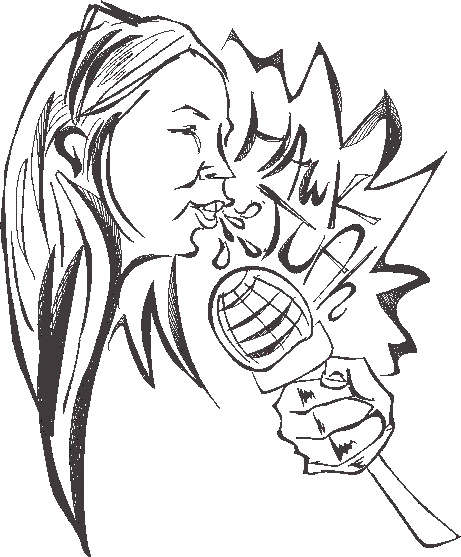
From “rizz” to “hawk tuah,” and now with the introduction of new words for females, such as “huzz” and “fine shyt,” we’re seeing an incredible amount of new internet buzzwords being introduced to us in a very short period. It’s become almost impossible to keep up with the ever-changing nature of internet lingo, especially when a new word keeps popping up every other day.

Internet slang has been a thing for the ages, often used in various manners on forums and chat boards such as Reddit, 4chan and others. Those who spent a lot of time on 4chan would be quite familiar with the introduction of the word “kek” and its commonplace use on various boards. Often being used as another way to say “lol,” it eventually seeped its way outside of the grasp of greentext and into the mainstream, seeing lots of use in multiple places online.
In the current era of internet culture, where a lot of new memes, trends and buzzwords often originate from TikTok, it’s often difficult to figure out exactly where each word originated from, as they all often get mashed up together and create this horrible amalgamation of modern-day brain rot. While this has been explored in the past, with the rise and fall of the TikTok “Rizz Party” and its hilarious gang of mischievous characters that added to its lore, we’re seeing exponential growth in the amount of chronically online buzzwords, in an almost inconceivable way.
At the time of writing, there has been an implosion of a variety of words on TikTok, most of which are often used to describe women. Words like “fine shyt” and “huzz” are being thrown around left and right, in memes, videos and posts that often satirize the act of “rizzing up” girls. Some people have gone as far as to make variations on the word “huzz,” which essentially is a way to avoid setting off TikTok’s NSFW word filters, because adding or changing a letter or two to make a new word makes it a lot harder for an algorithm to recognize a familiar offensive term. A TikTok post on the 16th of November sees the inclusion of an entire “Huzz language,” which includes words like “Geruzz,” “Swiuzz,” and “Canuzz,” each referring to females from different countries.
It’s almost comical how strange and nonsensical these words have become, and their introduction to modern-day internet lingo makes the barrier of entry to the internet world even harder, especially for the older generation of people. The upcoming generation of youth is being raised on an incredibly brainrot-loaded vocabulary, which makes communication with them all the more difficult.
It’s come to a point where this internet lingo has seeped into the real world, with another TikTok, posted on the 20th of November, featuring a whiteboard in a classroom, with a list of “banned” brainrot words and phrases written on it, including, but not limited to, “hawk tuah,” “huzz,” “rizz,” and many more. There are plenty more tragic consequences of modern-day brainrot on the current generation of youth.
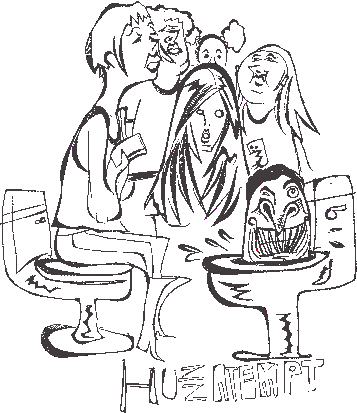
Another example of brainrot seeping into the real world comes in the form of a new trend on TikTok, where male teens attempt to “spit game” at some girls out in public, using a combination of “rizz” words like “fine shyt,” “huzz,” and all the other aforementioned terms. A November 12th TikTok posted by @toxic.zack, captioned “Rizz Attempt 3,” indicates his third attempt at trying to talk to some females in public.
The unfortunate leaking of internet culture into the real world is a direct consequence of this generation’s youth becoming much more chronically online than ever before. The lines between cringe and irony are blurred with each passing day, and sometimes, they reach a point where they can have a significant impact on the real world.
It’s become commonplace to have a specific word or phrase dominate the internet space for an extended period and with the introduction of the word “huzz,” it’s just another addition to the massive internet slang dictionary.
While practically harmless, some of these brainrot phrases have even turned into massive players in the crypto space. As inconceivable as it may be, some people have taken the opportunity in the volatile crypto market to make their own “meme-coins,” often hauling names such as $HUZZ and $CHILLGUY. $CHILLGUY is a reference to another trending meme, which involves a funny little caricature of a brown dog with his hands tucked in his pockets, with many relating to how “Chill” he is.
According to CoinMarketCap, the newly introduced meme-coin $CHILLGUY, which launched back on November 15th, jumped from $10 million to a $500 million market cap in just over ten days. For anyone who was able to catch this high, they could have easily turned a thousand-dollar investment into over a million dollars. This doesn’t stop there, with even more examples of zoomer-inspired crypto coins, including $SKBDI (For Skibidi Toilet), $MOG and $GOAT.
Although crypto pump-and-dumps are nothing new, and neither are meme-coins, as we already have $DOGE, which has existed for over a decade, it’s crazy to think that people are now using new brainrot slang terms to turn a profit. Knowing how volatile the crypto market is, some are gullible enough to gamble away much more than they can afford to lose, all in favor of making a profit on the word “huzz.”
It’s hard to tell where the internet will go moving forward, considering the incredible volatility of online trends as a whole, it’s entirely up to chance. Ever since the days of Trollface and other iconic online characters, there has always been a disconnect between the average internet user and someone who’s incredibly chronically online.
TikTok’s sudden surge in a variety of silly words and phrases that have become almost nonsensical is a testament to its insane impact on internet culture as a whole, with most new memes, trends and words being popularized or originating directly from the platform.
For further evidence of this effect, Dictionary.com even hailed “Demure” as the word of the year, a word that was popularized by TikTok creator Jools Lebron and essentially means “not being like other girls,” and Collins dictionary went ahead and gave that honor to “brat,” which they defined as someone who’s “confidently rebellious, unapologetically bold and playfully defiant.” To top it all off, Oxford University Press nominated “brain rot” as 2024’s word of the year, which is probably a telling sign that the internet has leaked far too much into the real world, infecting it like a plague.
When you look at their rise to fame, you can see that their popularity came in part due to their wide coverage on TikTok, with both words being used excessively in memes, comments and posts all across the platform. It’s become commonplace to have a specific word or phrase dominate the internet space for an extended period, and with the introduction of the word “huzz,” it’s just another addition to the massive internet slang dictionary.
However, one particularly noticeable thing is the exponential increase in slang terms over time. The time between every new word being made up is decreasing, while the quantity of new words being created is increasing dramatically. It’s become all the more difficult to keep up with what’s happening online, and unfortunately, there doesn’t seem to be an end in sight. It’ll only be a matter of time before Duolingo introduces a “Brainrot” language to its application, but in the meantime, keep a record of all the newest buzzwords in a personal journal to always stay in the loop.